
Why Surprise Gifts Hit Harder Than Predictable Ones
There's a real reason an unknown box feels better than one you can already guess. Here's the brain science, and how to use it without it backfiring.
January 20266 min
You know the feeling of opening something with no idea what's inside. Your hands move a little quicker, your brain perks up, and there's a small physical rush that just doesn't show up when you already know what's coming. That rush isn't only in your head as a figure of speech. It's your brain chemistry doing exactly what it evolved to do.
Your brain on surprise
A lot of what we understand about reward and anticipation traces back to the work of neuroscientist Wolfram Schultz, who studied how the brain responds to expected versus unexpected rewards. The short version is that an unpredictable reward fires off a stronger anticipation response than one you've already got pegged. The not-knowing is doing real work.
Researchers often call the gap between what you expect and what you get a "prediction error." When your brain can't call the outcome in advance, it leans in and pays closer attention. The moment feels more vivid and it sticks in memory better. That's a big part of why the psychology of gift-giving keeps circling back to surprise as the thing that separates a memorable gift from a pleasant-but-forgettable one.
Why unboxing videos took over the internet
The unboxing boom wasn't random. Watching someone open something they can't predict pulls us in because we tend to feel other people's reactions secondhand. Their excitement becomes a little bit of ours. It's borrowed anticipation, and it's weirdly satisfying to watch.
A good mystery gift runs on the same engine, except it's happening to the person in front of you in real time. Each item is its own small reveal. Instead of one big moment, you get four or five little ones, and there's solid thinking behind why several smaller surprises can feel better than a single large one of the same total value.
The trust factor
Here's the catch: not all mystery is fun. A random grab bag from a stranger is stressful. A box chosen by someone who knows you is electric. The whole difference is trust.
It only works when the person genuinely believes the surprise will be relevant to them. That's why a mystery box from a partner who pays attention hits completely differently than a generic subscription that could've gone to anyone. The excitement comes from the not-knowing; the safety comes from the relationship behind it.
Several small surprises beat one big one
A single $50 gift creates one moment of reaction. Five $10 items spread across a box create five. Work in hedonic psychology generally points the same way: spreading positive moments out tends to add up to more total enjoyment than cramming them into one event.
It's part of why gift baskets and themed sets tend to score well on satisfaction. The good feeling stretches across the whole unwrapping instead of peaking and fading in a single beat. Each reveal builds a little on the last.
When surprises go wrong
Mystery gifts can absolutely flop. They usually do for one of these reasons:
- The items feel random, like they were grabbed off a shelf rather than chosen for this person.
- Nothing connects to their real interests, so the surprise has no anchor.
- The not-knowing creates anxiety, because some people genuinely dislike being kept in the dark.
- The buildup outruns the payoff, and a big reveal lands on something flat.
The fix for every one of these is the same: know the person. A mystery gift only works when the mystery is what's inside, not whether it's going to be good. The recipient should already feel sure of that second answer before they even start unwrapping.
How to build a mystery gift that lands
The best surprise boxes balance the familiar with the new. A rough ratio that works:
- Two or three items that clearly reflect interests you already know they have.
- One or two items that are new but sit right next to something they already love.
- One item that's just fun and a little unexpected.
The known items build the trust. The adjacent ones create genuine, low-risk surprise. The unexpected one gives them a story to tell afterward. That mix is what turns a gift into something people bring up for months instead of minutes.
Why surprise gifts get remembered
Surprising moments tend to lodge in memory more strongly than predictable ones. When something catches us off guard, the brain flags it as worth holding onto, which is why people often recall not just what was in the box but exactly how they felt opening it.
That emotional imprint is what separates a gift that lasts in memory from one forgotten by the weekend. The act of opening becomes part of the gift itself, and that part costs nothing extra to include.
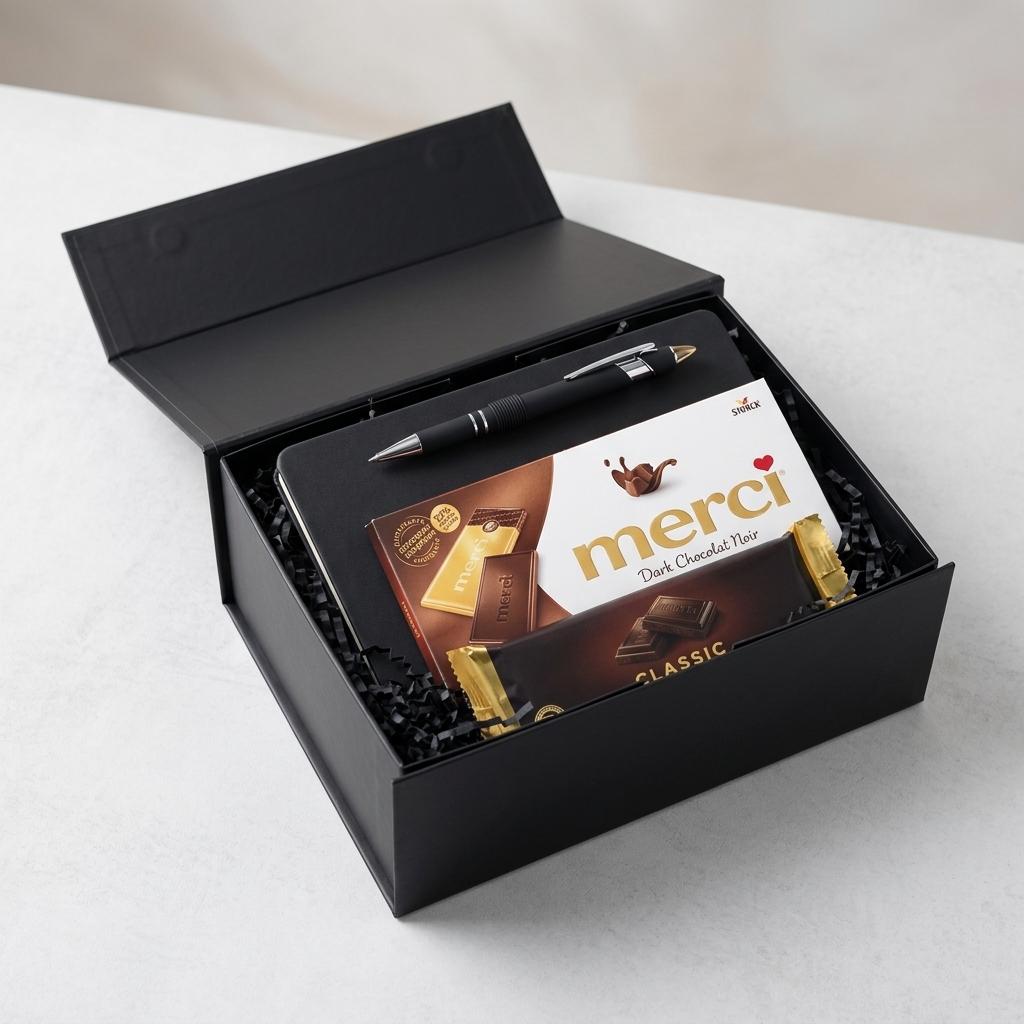
If you're leaning toward the mystery route, start with what you actually know about the person. The surprise should live in the specifics, not in whether the gift is any good. A SwipeGifts box keeps the reveal intact while the handwritten card carries the personal note, so the not-knowing stays exciting rather than risky.
Common questions
Why do surprise gifts feel better than expected ones?
Because uncertainty about a reward sparks a stronger anticipation response in the brain than a known outcome does. The moment feels more vivid and sticks in memory longer, which is exactly why an unknown box can beat one you've already guessed.
Do mystery gifts work for everyone?
No. Some people genuinely dislike not knowing, and for them a clear, expected gift is kinder. If someone gets anxious about surprises or likes to plan, skip the mystery angle and choose something open instead.
How do I stop a surprise gift from backfiring?
Anchor it in what you know about the person. Build most of the box around their established interests, add one or two adjacent new things, and keep the stakes low. The surprise should be the contents, never whether it'll be good.
Are several small gifts really better than one big one?
Often, yes. Spreading positive moments across a few reveals tends to add up to more total enjoyment than one single beat. A handful of well-chosen smaller items can outperform one pricier gift of the same total value.
What makes a mystery gift box trustworthy?
The person needs to believe whatever's inside will suit them. That trust comes from your relationship and from clear care in the choices. A box that ships with a card in your own words signals that thought up front, before anything is opened.
Keep reading
from the journal- The Psychology of Gift GivingJan 2026 / 7 min
- The Science of Gift-Giving SatisfactionFeb 2026 / 6 min
- Unique Gifts That Create Lasting MemoriesJan 2026 / 6 min
- Personalized vs Generic Gift PsychologyFeb 2026 / 6 min
- Small Gifts With Big ImpactJan 2026 / 6 min
If you would rather not guess, ask me.
Write to me at team@swipegifts.com with the person and what you want to spend, and I will tell you which box I would pack, whether you buy it here or not. Every one of them is packed by hand in Canada.